The Spring Offensive and the Final Offensive
In late March 1918 it was all or nothing for the German army. After making peace with Russia, the Germans had large numbers of troops and a lot of material at their disposal. Although they managed to win terrain in France, their reserves ran out and their supply lines became longer and longer. The Germans turned their thoughts to Flanders again. In mid-April the British fell back to Ypres, and the area they had fought for so fiercely in 1917 was lost within days. The Kemmelberg, the highest hill in West Flanders, fell into German hands. But the arrival of French reinforcements put an end to the German Spring Offensive. In the summer of 1918 the initiative passed definitively to the Allies. The arrival of more than two million fresh American troops contrasted starkly with the battle-weary state of the German army. Following the example of the British, French and Americans, the Belgians understood that participation in the final battle was necessary if they were to have any influence at the negotiating table. King Albert I was appointed head of Army Group Flanders, which was charged with conducting the final offensive in Flanders. On 28 September 1918 the offensive began, once again, with an attack on the high ground to the east of Ypres, which was needed as a base of operations for further advances towards the interior. On 11 November 1918 the Armistice was finally signed. After four years, the hostilities of the First World War came to an end. In Belgium alone, the war had claimed more than 600,000 lives.
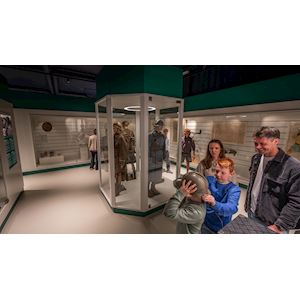

Passchendaele Museum
Discover what our museum has to offer by listening to or by reading the audio stops below.
- Berten Pilstraat 5A
- Zonnebeke Belgium
- 0032 (0)51 77 04 41
- www.passchendaele.be