No news from the Western Front
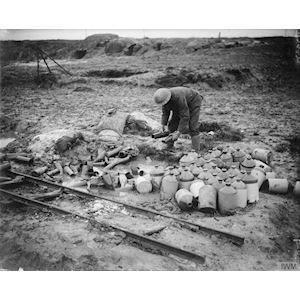
In the spring of 1916 fighting broke out at St Elooi, Mount Sorrel and Hill 62, where deep mines were used on a large scale. Once again, these initiatives did not lead to a strategic result but did cause thousands of deaths. The situation then remained relatively quiet in Flanders. The major battles were fought in France. In between the fighting there were opportunities for relaxation. A rotation system ensured that men were on the front line for only a few days. They then spent some time in reserve trenches and support trenches, followed by a period of rest in encampments or in towns further back behind the lines. Soldiers killed time with games of chance and by drawing and writing. Tobacco, alcohol and religion provided a temporary escape from the sufferings of war. Do you recognize the Schweppes, Perrier or Gordon’s Gin bottles? Those famous brands were to be found on the front line in the First World War. As well as brief times of rest, the men had longer periods of leave which gave them the chance to go home. Shorter leave could be spent in the towns behind the front, where the war briefly faded into the background. In a range of official and unofficial cafés, cinemas, concert halls, clubs or brothels, they found the relaxation they needed. The most popular towns where the Germans sought entertainment were Kortrijk, Bruges and Ghent. For British soldiers, Poperinge was the first ‘safe’ town behind the lines; they even nicknamed it ‘Little Paris’.

Passchendaele Museum
Discover what our museum has to offer by listening to or by reading the audio stops below.
- Berten Pilstraat 5A
- Zonnebeke Belgium
- 0032 (0)51 77 04 41
- www.passchendaele.be