Nelson
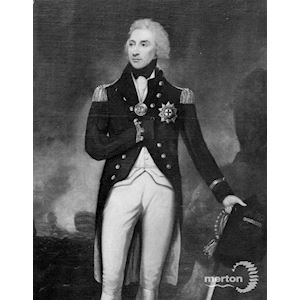
In October 1801, Horatio, Lord Nelson, Admiral of the British Fleet, moved into Merton Place. This was the only home he ever owned in his own right and he shared the property with his lover, Lady Emma Hamilton and her elderly husband, Sir William, a former British diplomat. This unusual domestic arrangement scandalised British society, however Nelson’s status as a national hero endeared him to the ordinary people of Merton. Originally known as Moat House Farm, Merton Place was purchased from the widow of calico printer, Charles Greaves for £9K. Emma quickly supervised its renovation and by 1805 the simple one wing house had been transformed into a fine double-fronted property with fine ornamental grounds, including a moat named “The Nile” in honour of one of Nelson’s famous sea battles. Today the Nelson Arms pub marks the former entrance gates to the house, which stood in 1.5 acres of land, south of Merton High Street. More land was purchased, across the road in the parish of Wimbledon. A tunnel ran beneath the high street, allowing Nelson’s carriage to transport him from one side of his estate to the other in privacy. Nelson regularly worshipped at Merton Parish Church, he watched cricket matches on Mitcham’s famous green and paid visits to the home of his friend, James Perry near Wandle Park, in addition to Eagle House School in Wimbledon – renamed Nelson House in the Admiral’s honour. Nelson thrived in what he termed “Paradise Merton” and his home was filled with extended family and naval colleagues. When Horatia, his secret daughter by Emma, joined the household, Nelson’s happiness was complete. Sadly this was not to last.On 5 September 1805 Nelson was called back to command the fleet, leaving behind “dear Merton [and ] all that I hold most dear in this world to serve my King and Country.” On 26 October at Trafalgar, Nelson’s tactical genius and the superior training of the Royal Navy led the outnumbered British ships to a decisive victory over Napoleon’s combined French and Spanish fleet. During the battle Nelson was fatally wounded on the deck of his flagship HMS Victory. He was later buried at St. Paul’s Cathedral. Grief-stricken, Emma Hamilton fell into a spiral of debt despite help from Nelson’s Merton friends, including Abraham Goldsmid of Morden Lodge. The Admiral’s estate was sold and Merton Place was demolished in 1823. Today the site is covered by the flats of Doel Close, part of the High Path estate.

Merton Heritage and Local Studies Centre
The Merton Heritage and Local Studies Centre tells the story of Merton and its people through a changing programme of exhibitions and events. This audio guide is part of a range of activities and support for local adult residents living with special needs, including autism, visual impairment and hearing loss. This project will help make Merton’s local heritage more accessible to visitors with a range of needs. Please refer to our website for opening hours.
- Merton Heritage Local Studies Centre
- London United Kingdom
- 020 8545 3239/4038
- libraries.merton.gov.uk/client/en_gb/