Merton Underground
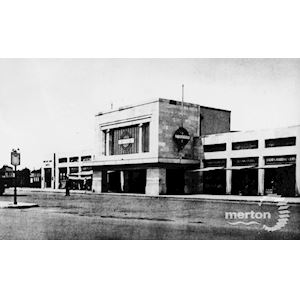
The extension of the Underground to Merton has had profound impact on the area, both economically and environmentally. First to arrive was the District line in 1889. A branch from Putney Bridge to Wimbledon was opened by the Metropolitan and District Railway, linking underground services to the existing London and South Western Railway station opened in 1838. The cottage style station, built at Wimbledon Park, still retains its original island platforms, canopies and signalbox. Although part of the Underground network, the Wimbledon branch operates an entirely overground service. This relied on steam-hauled trains until the line was electrified in 1905. The District Line extension prompted further suburban development during the 1880s and ‘90s. There was more house construction at the top and base of Wimbledon Hill, new shops, schools, services and greater employment opportunities. Today over 13 million journeys are made from Wimbledon Station alone, with a further 2 million from Wimbledon Park. By the early 1900s there were already calls to extend what is now known as the Northern Line. However disagreements between rail companies and the outbreak of World War One brought progress to a halt. It was not until 1923 that the City and South London Railway started tunnelling from Clapham to Morden. The line was constructed in deep shafts, using rotary excavators and Greathead shields, circular frameworks used to protect teams of workers from falling earth as they tunnelled forward. On the Merton section, workers had to contend with high water tables, severe weather and weeks of back-breaking digging. Designed by architect Charles Holden, new Stations were opened on corner plots at Colliers Wood and South Wimbledon , built in Portland Stone with Art Deco styling and floodlights to make them stand out. Morden offered more space for a wide cutting with tunnels to the side. Tracks ran through the station and on to a new depot. The station building itself had a roomy booking hall, flanked by small shops from newsagents and banks, to sweetshops and barbers. A large station garage was also built for Underground patrons. The Morden extension was opened with great ceremony on 13 September 1926 and 15,000 tickets were issued to local people as an incentive to travel. Such encouragement was unnecessary for by the end of December 500,000 people were travelling from Morden each week. By the late 1930s overcrowding was such a problem that passengers staged a series of sit-in protests. Travel discomfort was soon forgotten following the outbreak of World War II. By 1941 hundreds of people were regularly seeking shelter from enemy bombing on the deep-set platforms of Northern line stations. In the postwar era, services on the “Misery line” were a cause for discontent, partly due to old and defective rolling stock, transferred from the Piccadilly and Central lines. The entire Northern line fleet was finally replaced between 1997 and 1999. The new trains were also equipped with improved communication and safety features. Today more than 10 million journeys are made from Morden Station each year.

Merton Heritage and Local Studies Centre
The Merton Heritage and Local Studies Centre tells the story of Merton and its people through a changing programme of exhibitions and events. This audio guide is part of a range of activities and support for local adult residents living with special needs, including autism, visual impairment and hearing loss. This project will help make Merton’s local heritage more accessible to visitors with a range of needs. Please refer to our website for opening hours.
- Merton Heritage Local Studies Centre
- London United Kingdom
- 020 8545 3239/4038
- libraries.merton.gov.uk/client/en_gb/