Film studios
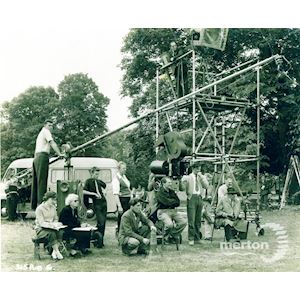
Merton is closely linked to some of the pioneers of British film production. The earliest example is the local studio founded by George Cricks and Henry Sharp in 1901. This stood near London Road, Mitcham, to the south of the cricket green. The premises included outdoor stages where short silent comedies and special effects movies were filmed, often featuring local sites and Mitcham residents as extras. Plots had to be hurriedly re-written if the weather changed. Described as the MGM of their day and using the same Lion’s Head trademark, Cricks & Sharp produced 2 – 3 films per week with titles such as “For Baby’s Sake” and “The Fairy Bottle.” These were shown at some of Merton’s early cinemas on Wimbledon Broadway and Merton High Street. In 1913, Cricks’ second business partner, John Martin founded his own studio at Quintin Avenue, Merton Park. The largest film production unit in the UK, its 15 staff made some of the earliest colour film- hand tinted to create atmosphere. By 1914, Martin was making propaganda pieces for the War Office, in addition to his popular comedies and touching romances. His studio output dwindled by 1916 and filming ceased in 1917. Between 1929 and the 1970s the vast Merton Park Studios produced an amazing variety of films from premises off Kingston Road. The greatest expansion came during World War II when the Canadian Army Film Unit began making wartime propaganda and public information films. During the 1950s Merton Park produced numerous films inspired by science fiction and the Cold War, including “The Brain Machine” starring Maxwell Reed. These were followed by the first t v detective series – the Edgar Wallace or Edgar Lustgarten Mysteries, many featuring local streets as backdrops. Merton Park Studios attracted some of the leading names in British film, from producer J Arthur Rank to director, Joan Littlewood, whose comedy “Sparrows Can’t Sing” opened in 1963, starring Barbara Windsor and James Booth. Actors Peter Sellars and Michael Caine also appeared in Merton Park Films, as did Rita Tushingham who starred in a 1960s biker movie called “The Leather Boys.” The studio even made a rival to “King Kong,” the cult classic “Konga.” By the late 1960s the Merton Park complex was mainly involved with post production work. One of the chief occupants, the Film Producers Guild left in 1967 and most of the studio site was then sold for redevelopment. The only surviving section is the historic property, Long Lodge, which is now commercial office space.

Merton Heritage and Local Studies Centre
The Merton Heritage and Local Studies Centre tells the story of Merton and its people through a changing programme of exhibitions and events. This audio guide is part of a range of activities and support for local adult residents living with special needs, including autism, visual impairment and hearing loss. This project will help make Merton’s local heritage more accessible to visitors with a range of needs. Please refer to our website for opening hours.
- Merton Heritage Local Studies Centre
- London United Kingdom
- 020 8545 3239/4038
- libraries.merton.gov.uk/client/en_gb/