Changes on the High Street
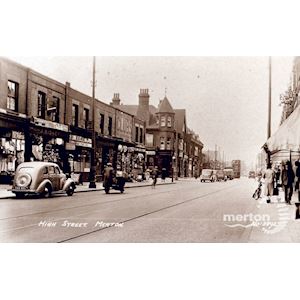
The high street has changed throughout the 19th and 20th centuries. In the Victorian age, department stores began opening across the UK. These turned shopping into a luxurious social event. A local example is Elys, which opened on Wimbledon Hill Road in 1876 and is still trading today. In 1940, rationing was introduced to prevent shortages during World War II. Mitcham resident Irene Bain remembered the impact of rationing: Second voice: Things began to get very scarce and luxury goods disappeared from the shops. I would often be sent to get the weekly rations… from Robins grocer’s shop in Sherwood Park Road. The shop itself would be quite crowded with people and a child was often made to wait a long time to be served…. The buxom peroxide blonde girl serving behind the counter would take the shopping list and ration books and put the items in the basket, crossing off the coupons in the books as she did so. Narrator: A ration book is on display here. These were issued until 1954. Meat was the last food to be taken off the ration. During the 19th and early 20th centuries, shopping for food involved trips to numerous shops. Customers were served by a shop assistant, who would weigh and bag their groceries. A set of scales similar to those used in local shops is on display here. The first self-service supermarkets started opening in Britain during the 1950s. Customers were offered wire baskets and selected their own groceries, rather than being served, and were able to buy all their goods in one shop. This innovation changed the face of British shopping permanently. The packaging on display illustrates a shift in shopping habits across the century. The move from plain pre-war goods to the more colourful 1950s packaging, shows a shift towards a consumer-driven shopping experience where brands had to appeal to shoppers.

Merton Heritage and Local Studies Centre
The Merton Heritage and Local Studies Centre tells the story of Merton and its people through a changing programme of exhibitions and events. This audio guide is part of a range of activities and support for local adult residents living with special needs, including autism, visual impairment and hearing loss. This project will help make Merton’s local heritage more accessible to visitors with a range of needs. Please refer to our website for opening hours.
- Merton Heritage Local Studies Centre
- London United Kingdom
- 020 8545 3239/4038
- libraries.merton.gov.uk/client/en_gb/